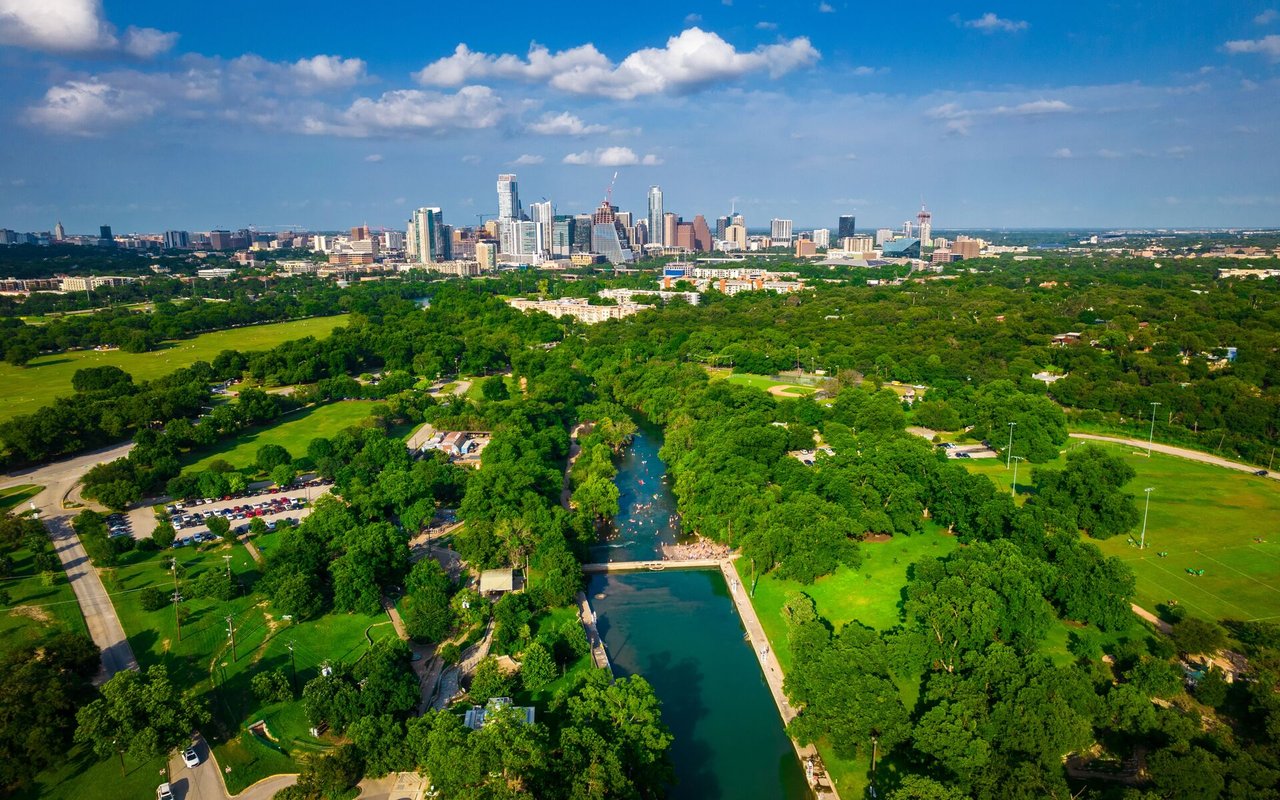
Welcome to Barton Hills
Barton Hills is one of the few central Austin neighborhoods where nature isn’t an amenity — it’s part of daily life. Tucked along the Barton Creek Greenbelt just south of downtown, the neighborhood blends wooded lots, modest streets, and a deeply residential feel with immediate access to the city.
It’s not flashy, and it’s not curated. Barton Hills appeals to buyers who value location and livability over status, and who want a home that feels grounded rather than performative.
What Does It Cost to Buy a Home in Barton Hills in 2026?
This is my own neighborhood, so I watch it closely. As of 2026, the typical Barton Hills home sells between roughly $1.1M and $1.3M, with price per square foot in the $500 to $620 range, per Redfin and Zillow. Prices are up over the past year while much of Austin softened, which tells you how much people value being a walk from Barton Springs and the greenbelt.
What you are paying for here is location, not size. The lots are modest, the original ranch homes are small, and the premium is the ability to walk your kids to Barton Springs on a Saturday morning. Homes move quickly, around 50 days, because demand for this specific pocket rarely lets up. Buyers who wait for a deal in Barton Hills usually keep waiting.
Who Barton Hills Is (and Isn’t) Right For
Barton Hills works well for buyers who want to live close to downtown Austin while staying connected to the outdoors. Many residents walk or bike to the Greenbelt, spend weekends at nearby parks, and prioritize privacy and shade over new construction gloss.
It’s not the right fit for buyers looking for large, flat lots, uniform architecture, or turnkey luxury. Homes here often reflect the era they were built in, and renovations tend to be thoughtful rather than expansive. If predictability is important, Barton Hills can feel inconsistent block to block — which is part of its appeal for the right person.
The Barton Hills Lifestyle
Daily life in Barton Hills feels unhurried. Mornings often start with trail access rather than traffic. Evenings are quiet, with a noticeable absence of through-traffic compared to other central neighborhoods.
Proximity to
Barton Creek Greenbelt and
Zilker Park shapes how people live here. Outdoor routines — walking, running, swimming — are part of normal life, not weekend plans. Downtown Austin remains close, but Barton Hills rarely feels urban.
Homes, Architecture, and Lots
Housing in Barton Hills is eclectic by design. You’ll find original mid-century homes, carefully updated residences, and occasional newer builds that respect the surrounding scale. Streets are tree-covered, and many homes sit on sloped or irregular lots that provide privacy and character.
Buyers who do best here focus less on square footage and more on placement, shade, and connection to the land. Sellers who prepare thoughtfully — without overbuilding — tend to see the strongest results.
Schools and Everyday Practicality
Barton Hills is served by
Austin Independent School District, with a mix of nearby public and private options. For many families, the appeal lies less in rankings and more in lifestyle — walkability, outdoor access, and proximity to cultural and employment centers.
Errands are simple, commutes are short, and the neighborhood’s location makes it easy to move between work, recreation, and home without friction.
Local Spots and Everyday Favorites
Barton Hills doesn’t revolve around nightlife, but it benefits from nearby local staples:
- Barton Springs Saloon offers casual dining and a relaxed neighborhood atmosphere.
- Chuy’s Barton Springs remains a longtime local favorite.
- Access to South Lamar and Barton Springs Road puts additional dining and shopping within easy reach, without bringing the noise home.
Market Reality in Barton Hills
Barton Hills is supply-constrained and steady. Homes don’t trade as frequently as trend-driven neighborhoods, and pricing is often influenced by lot characteristics, privacy, and adjacency to green space more than finishes alone.
Buyers make mistakes when they underestimate renovation complexity or expect uniformity across the neighborhood. Sellers misstep when they ignore preparation or price based on proximity alone. Barton Hills rewards realism and patience on both sides.
Frequently Asked Questions About Barton Hills
How much does a home in Barton Hills cost in 2026?
Most homes trade between roughly $1.1M and $1.3M, with price per square foot from about $500 to $620. You are paying for location and walkability more than square footage.
What school district is Barton Hills in?
Barton Hills is served by Austin ISD, with Barton Hills Elementary feeding O. Henry Middle and Austin High.
Why is Barton Hills so popular?
Walkability to Barton Springs Pool and the Barton Creek Greenbelt, a short hop to downtown, and a tight, established feel. It is one of the few close-in Austin neighborhoods where families actually walk to the water.
Are Barton Hills homes a good investment?
Demand for this specific pocket is durable, and values held and even rose through the recent correction. The trade-off is smaller lots and older homes, so buy for the location and plan to update.
Thinking about buying or selling in Barton Hills?
If you want the market side, what homes actually cost and how the quiet sales happen, that lives on my
Barton Hills realtor page.
My Perspective on Barton Hills
Barton Hills is a neighborhood where judgment matters. I spend time helping clients understand which streets, lot orientations, and home styles will actually support the lifestyle they want — not just look good online.
For sellers, the best outcomes come from restraint and thoughtful positioning. For buyers, success often means moving decisively when the right home appears, rather than waiting for a perfect one that may never exist here.
Related Pages