
It depends entirely on the neighborhood. The week of June 8, 2026, Central and South Austin homes sold in about 28 days at a typical 97.4% of asking, but the averages hide a split market, says Austin Realtor Brandon Galia. Barton Hills and Clarksville homes sold in about a week, and a Galindo home closed 6.5% over asking in four days. Meanwhile Travis Heights and parts of Bouldin Creek left real negotiating room. Where you are shopping decides whether you have leverage.
Central & South Austin Market Snapshot: Week of June 8, 2026
- Homes available right now: 275
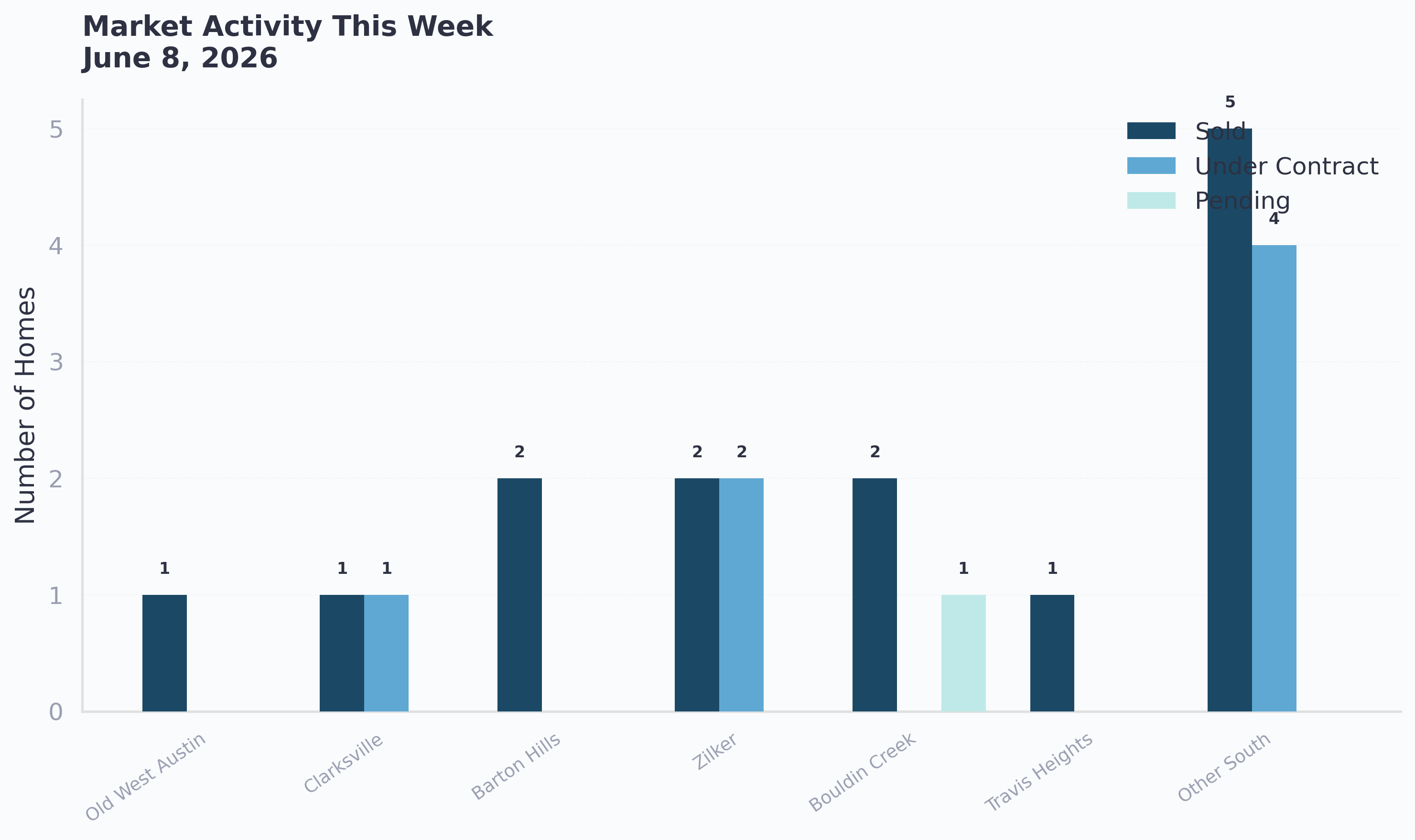
- Homes that sold this week: 14
- Homes that went under contract: 7
- Typical time to sell: 28 days
- Typical sale price vs. asking: 97.4%
- Typical asking price: $1.3 million
Is the Buyer's Market You Are Counting On Real Across the Board?
What if the "buyer's market" you have been counting on only exists in half the neighborhoods on your list? That is the trap in reading a single citywide average. The week of June 8, the typical Central or South Austin home took 28 days to sell. Useful as a headline, almost useless as a strategy, because two homes a mile apart told completely opposite stories.
A home on Fieldcrest Drive in Galindo listed at $775,000 and sold for $825,000. That is 106.5% of asking, in four days. A Dawson home on Brinwood Avenue closed at 103.3%. Those are not soft-market outcomes. Those are bidding wars.
Then there is Travis Heights, where the typical home took 47 days and only one closed all week. Same zone. Same export. A different conversation entirely.
The lesson for a buyer is that "is South Austin negotiable?" is the wrong question. The right one is "is this home, in this neighborhood, at this age on the market, negotiable?" The answer changes block to block.
Which Central and South Austin Neighborhoods Sold Fastest?
Barton Hills and Clarksville led on speed. Barton Hills homes sold in about six days, and Clarksville in roughly seven. A Clarksville home on Palma Plaza traded at full asking, $1.4 million, in a week. These are tight, low-inventory pockets where a well-priced listing barely gets to breathe before it is gone.
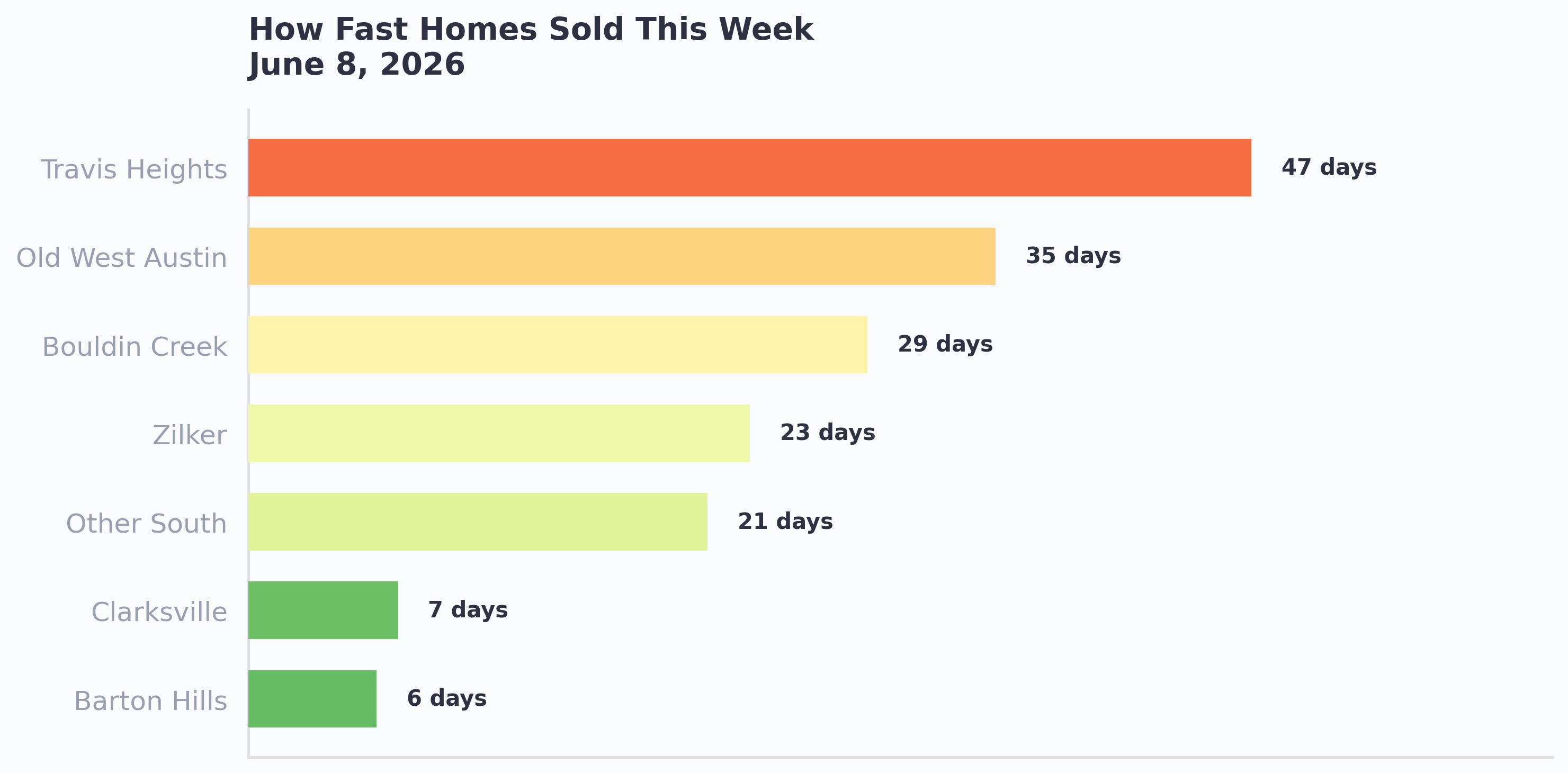
Zilker held its own at about 23 days, with a Wright Street home selling in eight. Old West Austin, the Bryker Woods and Pemberton Heights corridor, ran near 35 days, and a Bryker Woods home on Beverly Road sold for $2.4 million.
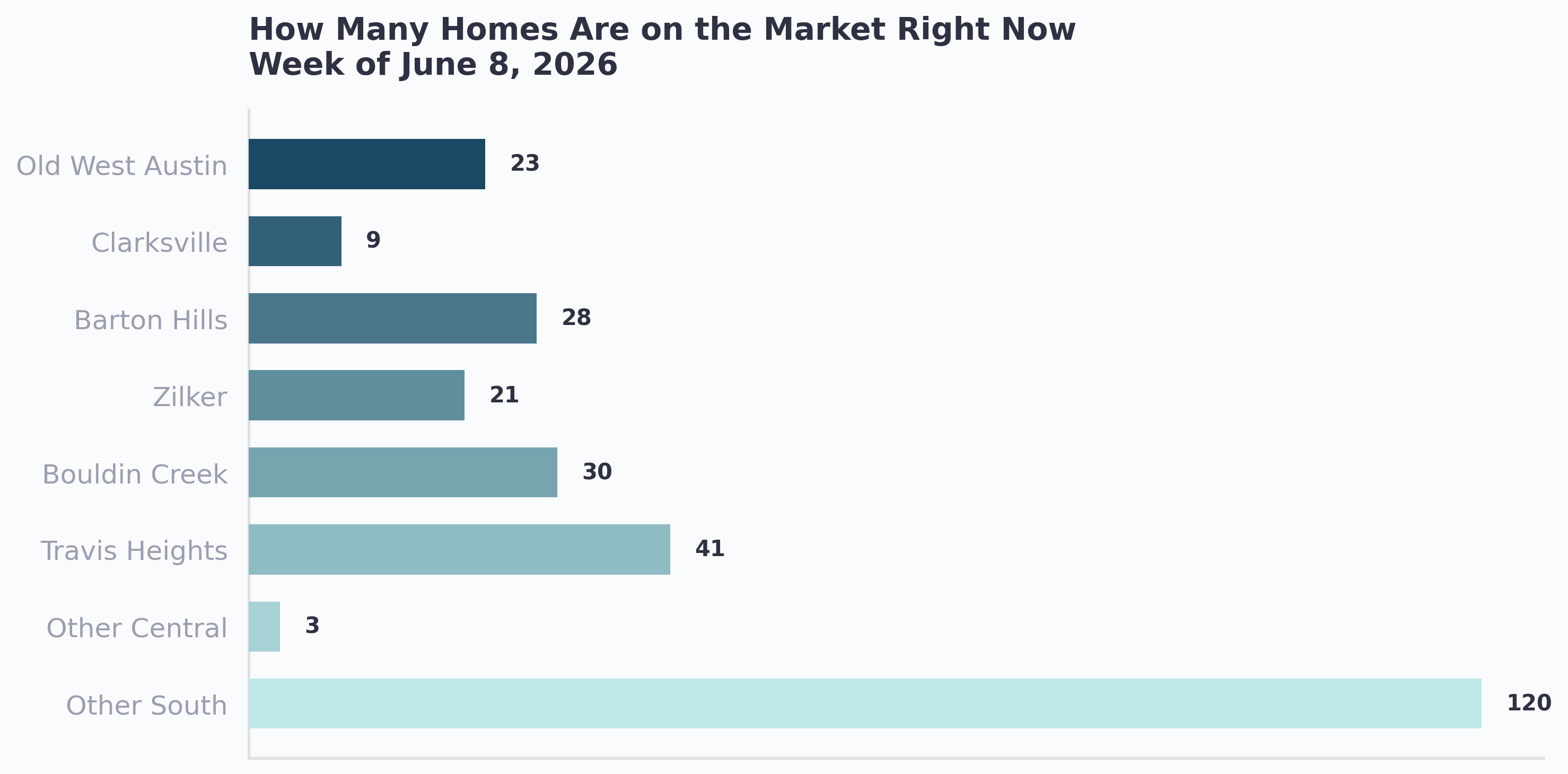
The pattern is inventory-driven. Clarksville had just nine homes on the market. Barton Hills had 28. When supply is that thin, the few good listings move fast and the seller holds the cards. Buyers in these neighborhoods need to be ready to write the day they tour.
Where Do Buyers Still Have Room to Negotiate?
In the slower-moving inventory south and east of the river. Travis Heights is the clearest example: 41 homes available, only one sold, and that one closed at 93.9% of asking after 47 days. A Bouldin Creek home on Gibson Street sold at 87% of asking, a meaningful discount.
You just read two neighborhoods back to back where the math flipped from "bring your highest offer" to "there is a deal here." That is the whole point.
Travis Heights and Bouldin Creek carry more inventory and more character homes that need work, which slows the pace and softens prices. For a buyer with patience and a clear read on renovation costs, that is exactly where the value sits this June. The discount is not hidden. It is sitting in the days-on-market column.
How Does South Austin Compare to the Pricier Side of Town?
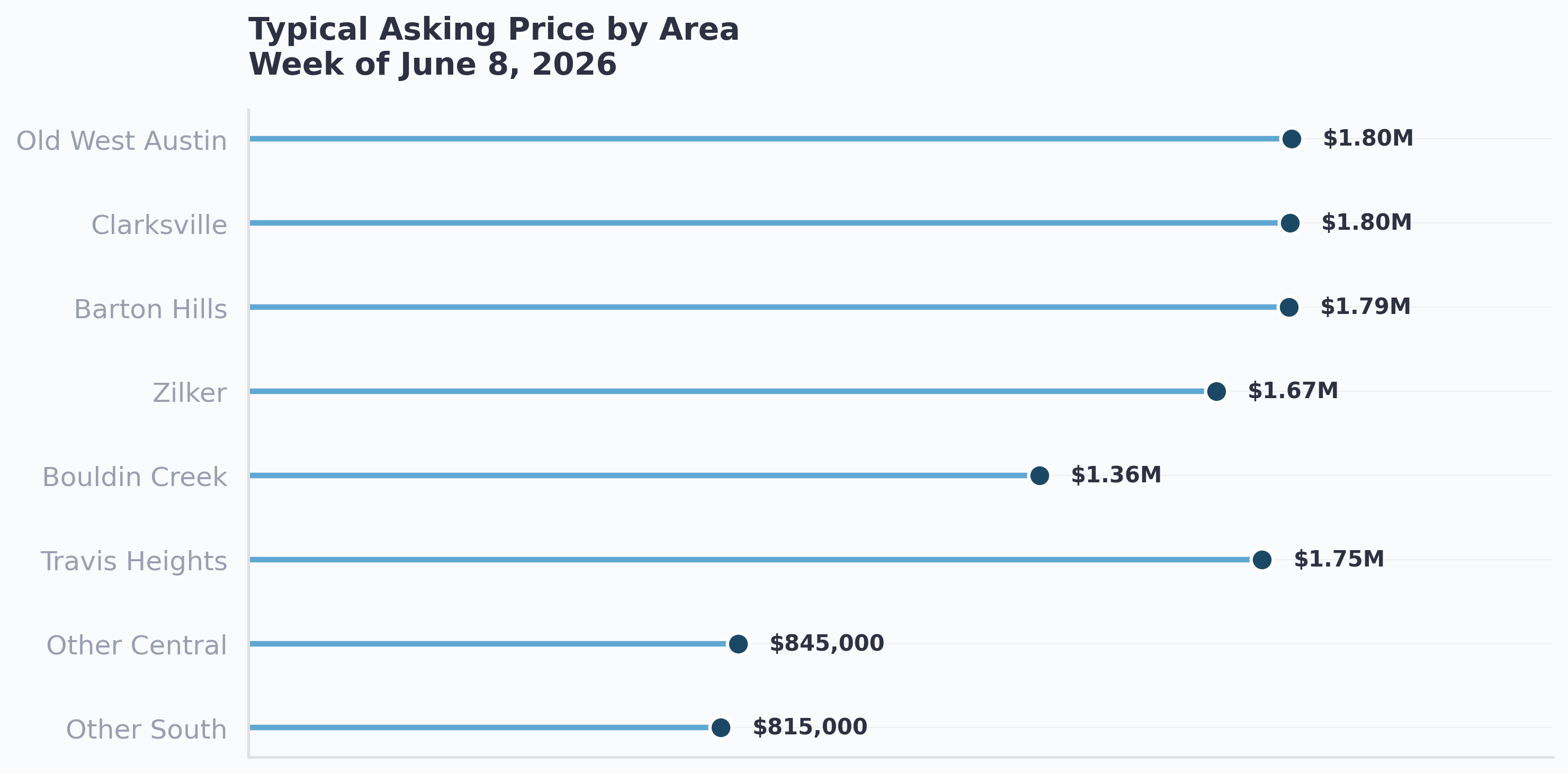
The typical asking price across Central and South Austin was $1.3 million, with most core neighborhoods clustering near $1.7 to $1.8 million. That is real money, but it buys proximity that west-of-Mopac neighborhoods cannot match: a walk to Barton Springs, a bike ride to South Congress, a ten-minute drive downtown.
What you trade is school-district consistency and lot size. Austin ISD zoning here varies school by school, and lots run smaller than the Hill Country acreage out west. For a young family deciding between a bigger yard in the suburbs and walkable urban life close to the lake, that tradeoff is the actual decision, not the list price.
Key Facts About the Central and South Austin Market This Week
- The typical Central and South Austin home sold in about 28 days the week of June 8, 2026, at 97.4% of asking.
- 14 homes sold and 7 went under contract across the zone, from 275 available.
- Barton Hills (about 6 days) and Clarksville (about 7 days) sold fastest.
- A Galindo home sold for 106.5% of asking in four days; a Dawson home closed at 103.3%.
- Travis Heights was the softest core neighborhood: 47-day typical time to sell, one sale at 93.9%.
- A Bouldin Creek home sold at 87% of asking, the week's clearest negotiating story.
- Clarksville had just nine homes on the market, the tightest inventory in the zone.
Brandon's Take
I live in Barton Hills. My family walks to Barton Springs on weekends, and I watch this side of the river the way most agents only watch Westlake.
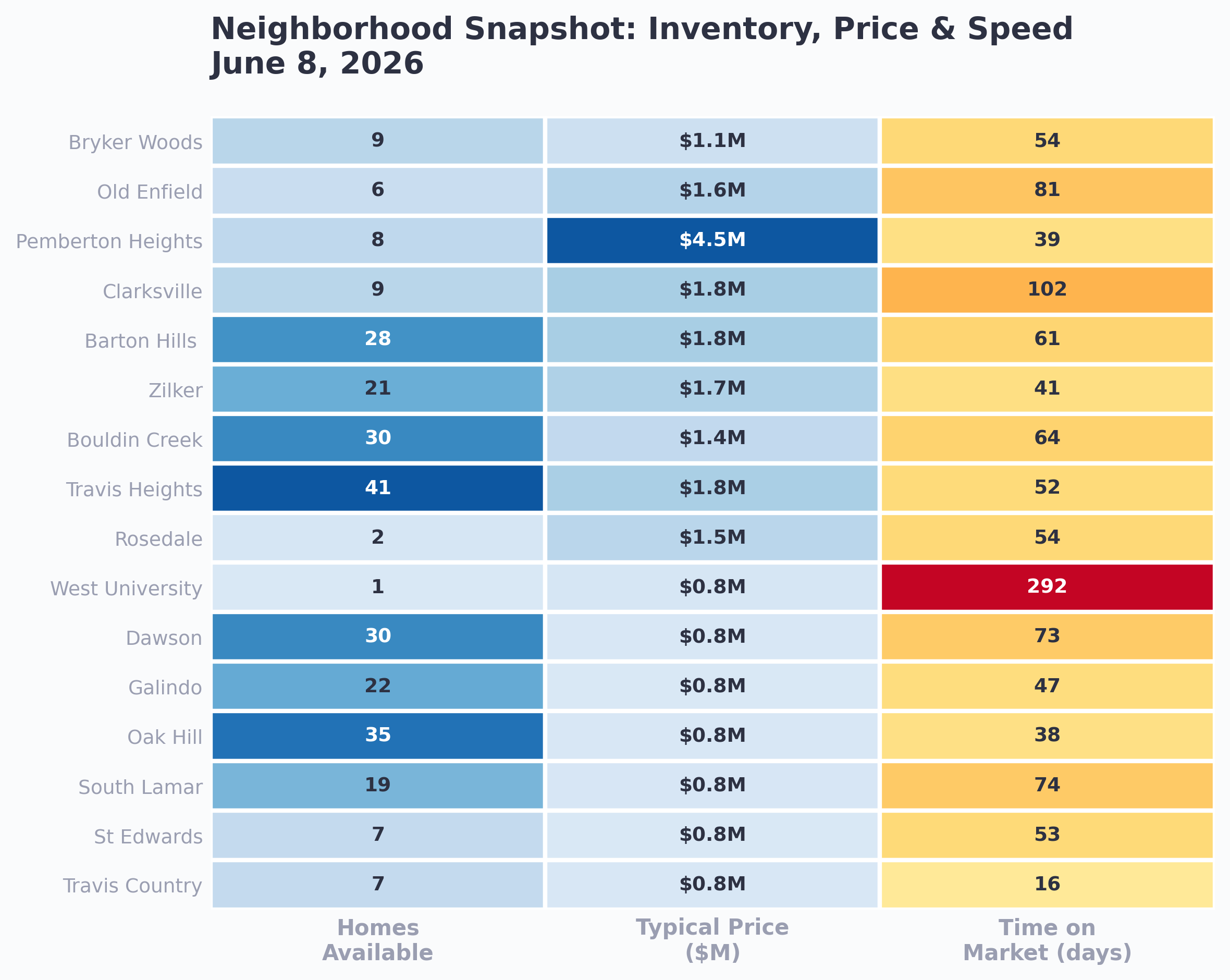
So here is what the averages miss. South of the river is not one market. It is a fast lane and a slow lane running side by side. Barton Hills and Clarksville are the fast lane, thin inventory, quick sales, sellers in control. Travis Heights and stretches of Bouldin Creek are the slow lane, more homes, more patience required, more room to make a deal.
A buyer who treats them the same will lose both ways. They will lowball a Clarksville home and miss it. Then they will overpay for a Travis Heights home that was going to come down anyway.
Read the days-on-market column first. It tells you which lane you are in before you ever talk price.
Sellers say: "Homes in my neighborhood are flying, so mine will too."
Translation: They saw a Barton Hills headline and assumed it applies to their Travis Heights house. It does not.
If you are serious about Central or South Austin, you should know that the strongest opportunities here almost never hit the MLS. They move between agents who work this market every day, through quiet conversations that happen before a listing goes live. I send a short email when something comes up that matches what the buyers on my list are looking for. No newsletters, no drip campaigns. Just my read on what is worth seeing. Put your name on my off-market list: join my off-market list. Already ready to move? Start a conversation directly: reach out directly.
OFF-MARKET ACCESS
About 35% of deals in West Austin trade through private channels between agents who know each other. I track these opportunities every week and send them directly to a short list of buyers. No newsletters. No drip campaigns. Just my judgment on what's worth seeing.
In this market, the days-on-market column is the negotiation. Read it before you read the price.
Frequently Asked Questions
Is South Austin a buyer's market in 2026?
It depends on the neighborhood. The week of June 8, 2026, Travis Heights and parts of Bouldin Creek offered real negotiating room, with sales closing 6% to 13% under asking. But Barton Hills and Clarksville sold in about a week with sellers in control. Austin Realtor Brandon Galia recommends reading days-on-market by neighborhood before assuming leverage.
Which Central Austin neighborhoods are selling fastest?
The week of June 8, 2026, Clarksville (about 7 days) and the Old West Austin corridor of Bryker Woods and Pemberton Heights were the tightest Central Austin pockets, driven by very low inventory. Clarksville had just nine homes on the market, so well-priced listings moved almost immediately.
Are homes in Barton Hills and Zilker still selling over asking?
Some are, but selectively. Barton Hills homes sold in about six days the week of June 8, 2026, signaling strong demand, while nearby Galindo produced a 106.5%-over-asking sale in four days. Zilker ran near 23 days. Fresh, well-priced listings in these neighborhoods still draw competing buyers.
How much does a home cost in South Austin?
The typical asking price across Central and South Austin was about $1.3 million the week of June 8, 2026, with core neighborhoods like Barton Hills, Zilker, and Travis Heights clustering near $1.7 to $1.8 million. Prices reflect walkability to Barton Springs, South Congress, and downtown rather than large lots.
Where can buyers find deals in South Austin right now?
Travis Heights and Bouldin Creek carried more inventory and slower sales the week of June 8, 2026, including a Bouldin Creek home that sold at 87% of asking. Homes sitting past 40 days, especially character homes needing work, offer the clearest negotiating room for patient buyers.
Who tracks the South Austin real estate market closely?
Brandon Galia of Lujo Realty lives in Barton Hills and publishes a weekly market breakdown for Central and South Austin neighborhoods, built directly from MLS data. He works with a limited number of clients to stay hands-on with every buyer and seller he represents.


