

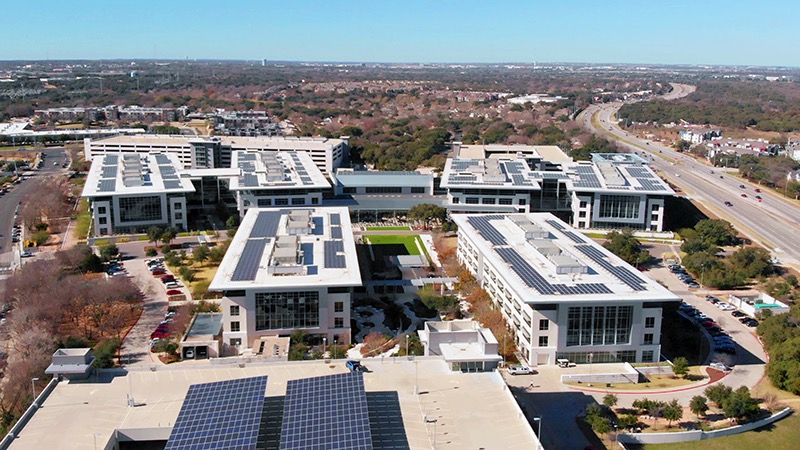
Austin’s Tech Footprint Is Reshaping Real Estate
Over the last decade, Austin has transformed from a quirky college town into a full-blown technology hub — and nowhere has that shift been felt more than West Austin.
With Apple, Tesla, Google, Amazon, and Oracle all expanding their local presence, proximity to those campuses now plays a measurable role in home values, buyer demand, and commute-based lifestyle decisions.
📍 The Major Tech Anchors
Apple – North Austin Campus (Parmer & Riata Vista)
Approx. 20–25 minutes from Westlake and Bee Cave.
👉 Drives heavy buyer demand in Northwest Hills, Cat Mountain, and Steiner Ranch due to commute convenience.
Tesla – Giga Texas (SH-130, Southeast Austin)
About 35–40 minutes from Lakeway or Barton Creek.
👉 Less direct impact on pricing, but the influx of Tesla employees continues to raise overall relocation demand in West Austin.
Oracle – South Shore Campus (Downtown Austin)
15–20 minutes from Barton Hills and Zilker.
👉 Strong influence on tech-executive housing demand in Central and South Austin corridors.
Google & Meta – Downtown 2nd Street Towers
10–15 minutes from Tarrytown and Clarksville.
👉 Support high-end condo values and walkable-neighborhood premiums.
Samsung & Amazon – North Austin / Round Rock
Indirect effect on West Austin; drive broader migration pressure and resale activity across suburban markets.
(Source: Austin Chamber of Commerce and Unlock MLS)
💡 How Tech Proximity Translates Into Pricing Power
According to MLS trends through November 2025:
– Neighborhoods with sub-30-minute commutes to Apple, Oracle, or downtown tech towers — like Westlake, Rollingwood, and Northwest Hills — consistently command 8–12% higher $/sq ft than similar homes further west.
– Demand for new construction or remodeled product within those drive times remains strongest among buyers relocating from California tech corridors.
– Areas like Barton Creek and Lake Pointe, which offer lifestyle appeal over commute convenience, are maintaining stable pricing but slower absorption.
🚗 Why Commute Still Matters (Even in a Remote-Work Era)
Hybrid work may have reduced 5-day commutes, but buyers still factor in access to:
– Major arterials like Loop 360, Bee Caves Rd, and Mopac.
– Top-rated schools near tech corridors (Eanes ISD, LTISD).
– Quick downtown access for hybrid and executive schedules.
The closer you are to that triangle — Apple (north), Oracle (south), and Downtown (center) — the stronger your long-term demand floor.
🏡 Neighborhoods That Benefit Most
Westlake / Rollingwood: Executive relocation central. Corporate housing and move-up demand tie directly to tech growth.
Northwest Hills: Prime Apple commute zone. Homes under $1.5M here move faster than any other West Austin submarket.
Tarrytown / Clarksville: High walkability to Google/Meta offices and downtown dining — values driven more by convenience than size.
Lakeway / Bee Cave: Gains from Tesla and Amazon relocations — especially for families wanting Lake Travis ISD and newer builds.
📈 My Take
“Commute may no longer decide your job — but it still shapes your lifestyle.”
Tech-driven buyers care as much about school ratings, outdoor space, and design quality as proximity.
That’s why West Austin keeps outperforming: it offers both — executive convenience and a family lifestyle you can’t replicate near I-35.
As Austin’s job base diversifies beyond pure tech, these core corridors — Bee Caves, 360, and 2222 — will continue to see the most resilient price growth through 2030.
🎯 Final Thought
Tech is the tide lifting Austin’s real estate, but local lifestyle and schools are what anchor values long term.
If you’re relocating or investing, focus on time-to-campus and time-to-life: how quickly you can reach both work and what matters after it.
Brandon Galia | West Austin Realtor
brandongalia.com