


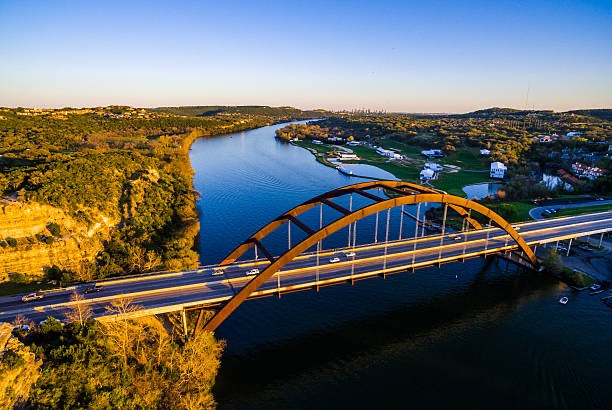
The shift from Silicon Valley to the Texas Hill Country
For years, the Bay Area defined what success looked like in tech, innovation, and lifestyle. But as cost, congestion, and burnout grew, a quiet migration began—first to the suburbs, then to states with more space and balance. Austin became the natural landing spot, and West Austin is where many of those families now call home. It’s the part of Texas that feels most like Northern California—green, creative, connected, and calm.
The same energy, just with better weather
The people moving from the Bay Area aren’t leaving ambition behind; they’re just choosing a new version of it. West Austin neighborhoods like Westlake, Rollingwood, Barton Creek, and Lakeway carry that same forward-thinking energy that defined Palo Alto and Marin. You’ll still find architects, founders, and investors—only now they’re talking about lakefront sunsets, not commute times.
What’s driving the move
The reasons for leaving California aren’t just financial, but the math does matter. With no state income tax and more affordable real estate, even high-income families save tens of thousands annually. Add in Austin’s booming job scene—Apple, Google, Tesla, Oracle—and the relocation logic becomes impossible to ignore. You get the same caliber of opportunity without the constant tension of scarcity.
Lifestyle that feels familiar—but freer
If you’ve lived in Marin or Los Altos Hills, the topography of West Austin will feel like home. Winding roads, rolling hills, mature trees, and modern architecture set into nature. But here, that landscape comes with lakes, trails, and neighborhoods built for daily outdoor life. You can paddleboard in the morning, work in the afternoon, and catch live music at night—all within a few miles of home.
The school factor
Bay Area parents consistently cite schools as the top reason for choosing West Austin. Eanes ISD and Lake Travis ISD rank among the best in Texas, offering strong academics, arts, and sports programs. Families say the experience reminds them of pre-tech-boom California—personal, involved, and community-driven. It’s not uncommon for kids to walk or bike to class, and teachers often live within the same neighborhoods they serve.
How the homes compare
In Silicon Valley, a $3M home might be 2,500 square feet with limited yard space. In West Austin, that same $3M can mean 4,500–5,000 square feet, a pool, a guest suite, and a view. Luxury builds here are driven by lifestyle, not lot constraints. The modern architecture, outdoor kitchens, and seamless indoor-outdoor design are all here—you just finally get to enjoy them fully.
Quality of life in numbers and minutes
No state income tax. Property taxes around 1.7–2%. Commutes that average 15–25 minutes instead of 60. Parking that’s free and easy. And instead of scheduling time in nature, it’s built into your day. The math may convince you to move—but it’s the minutes you get back that make it worth it.
My take
The Bay Area built the future. West Austin is where many of those people are now choosing to live it. You don’t lose your edge here—you just gain space, sanity, and sunsets. For families and professionals alike, it’s the next chapter that makes sense.
Brandon Galia | West Austin Realtor
brandongalia.com


